When people leave prison, they’re often starting at zero: Zero money, zero housing, zero support, zero dignity.
That’s why organizations like Clarifi and Ardella’s House are equipping Philadelphians with the financial and workforce resources they need to build secure, joyful futures.
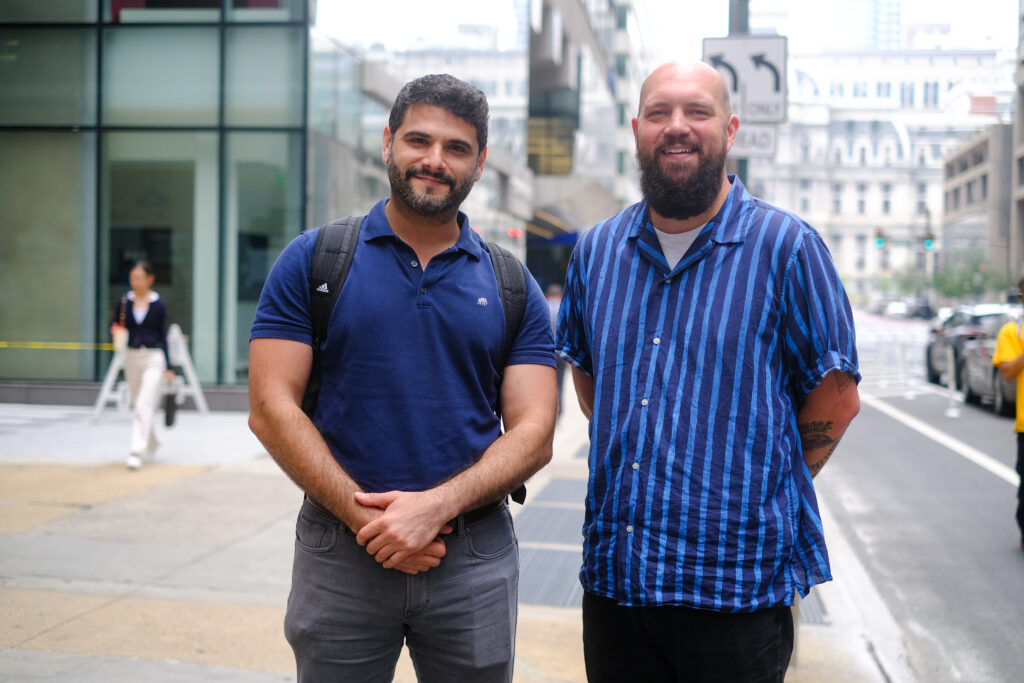
To learn more, we sat down with two experts in the field—Clarifi’s own Tyler Young and Jordan Cohen of Ardella’s House. Together, we talk about major reentry issues while envisioning a world with enough resources to empower every justice-impacted individual.
How do each of your organizations help justice-impacted Philadelphians?
Tyler Young, Reentry Program Manager, Clarifi: In 2020, we partnered with the City of Philadelphia to develop and manage a reentry program that combines Clarifi’s financial empowerment counseling with cash assistance to help justice-impacted individuals stabilize their financial and housing situation. In the last three years, we’ve distributed more than $1.2 million to more than 1,200 reentry clients. But this isn’t just about cash: We’re helping people overcome barriers to reentry by building a foundation of financial stability through our expert counseling services. Our program addresses both short-term crises and long-term goals like building credit and emergency savings. Clarifi’s reentry clients are better positioned to afford their first apartment, secure a job, avoid predatory loans, and maintain financial stability.
Jordan Cohen, Workforce Development Coordinator, Ardella’s House: Our entire organization is dedicated to serving people with criminal justice histories. I was specifically brought on to launch our new Workforce Development Program, which will provide personalized coaching, workshops, and wraparound support for justice-impacted folks, so they have the resources and skills necessary to build a successful career. We’re also now providing professional development services to young men and women (ages 18 to 25) who were charged with low-level offenses, through a new prison diversion program in partnership with the Philadelphia District Attorney’s office. If participants successfully complete the program, which is tailored to their unique situation, they will avoid prison time and have their charges dropped.
Why is financial knowledge important, particularly for people impacted by the criminal justice system?
JC: A lot of the criminal activity we see in Philadelphia is due to cycles of poverty that are rooted in trauma, systemic racism, and inequality. People turn to what they have to in times of crisis, and when you’re in poverty, you’re in perpetual crisis. People will sign up for predatory loans, take jobs under the table, and turn to crime in times of crisis to get money, and they make these decisions under stress and scarcity. These cycles won’t change unless you are either Superman or are given the right resources.
TY: If someone doesn’t have financial stability, that scarcity may lead them to making decisions they wouldn’t normally make. The lower your credit score is, the higher your interest, the higher your payment, and the more money you’re going to spend over time. So people often don’t see any choice but to commit crimes for money. That’s why it’s extremely important for us to help folks build a strong financial foundation.
What do people need to reenter successfully?
JC: They need money, and they need counseling to learn how to manage their money. Because they were in prison, they weren’t generating income or wealth. That’s years of not making money. And reentry is expensive. A lot of people think of it as this lovely moment when you get to leave, walk out of prison, hug your family, go home, and eat a steak. In reality, a lot of people move into transitional housing, where they need to figure out employment, transportation, housing. At the bare minimum, they need get to their probation officer’s office.
TY: Another cost we don’t talk about enough is the familial cost. A lot of these folks need to re-create relationships with family members that were broken or didn’t exist during incarceration. The foundation of family support is critical, on top of financial stability.
Why should we combine cash with counseling for justice-impacted folks?
TY: Clarifi’s belief is that the people who receive our grants will use the money on what they need it for. If we’re offering the right guidance, as far as financial literacy skills like improving credit and budgeting, those folks are not only receiving a financial education: They’re putting that knowledge into action. A $1,000 grant isn’t going to solve everyone’s problems, but it can create a foundation to move them toward financial stability.
JC: One of our clients was so excited to receive the $1,000. She said, “It’s going into the bank! You know I’m going to save this.” She kept saying “Right in the bank!” She had been facing eviction due to her landlord not having the proper city permit to rent. She doesn’t have a lot of family support, nor did she have anywhere to move her personal items, so she lost all of it, including work clothes. Some of her grant will go toward the black work pants she needs to start her new job. This is a woman in her early 40’s who was in prison two separate times for three to five years each. She reentered three years ago and still faced a perfect storm of financial issues: Losing her home, losing all her stuff, having to send her kids to live with someone else, starting a job she didn’t have the required clothes for. So, this $1,000 lifted an incredible weight off her shoulders.
These cycles won’t change unless you are either Superman or are given the right resources. -Jordan Cohen, Workforce Development Coordinator for Ardella’s House
What does the ideal reentry scenario look like to you? When does it start?
JC: The ideal reentry journey would start during incarceration, with free counseling and supports inside prisons and jails. That way, you come out of prison having received mental health counseling (if that’s what you need), proper health care, nutritious food, family time, and parental support. Once you reenter, you’re given a case manager who is dedicated to their job and has a roadmap of reentry resources throughout the city because there’s enough public and private funding to support all justice-impacted residents. You start working because every business in your community is a fair chance hirer, and you leave transitional housing early because you can live with family or you have enough money for a rental. You continue receiving the same supports you got while in prison. There are skills courses and certificates available to you specifically because you’re in reentry and society is invested in upskilling you and giving you credentials. Along the way, you’re learning that a life of crime is ultimately a bad life. You’re learning that contributing to society and helping other people is the fulfilling way to live and be happy and fruitful.
TY: Having a high level of support goes a long way, as well as knowing how to navigate these complex systems and resources around the city. And to Jordan’s point, one of the biggest requests I’ve received from partners is to start Clarifi’s financial empowerment counseling and grant disbursal while the client is either still incarcerated or right after they come out.
Jordan, you’ve said that for a lot of people re-entering society, this is their first time trying to get a legal job. They want to change their lives for the better. What responsibilities do organizations like Clarifi and Ardella’s House have to support them?
JC: Oftentimes, justice-impacted people were not treated with respect or dignity while incarcerated. So anywhere they go, they now expect the same negative treatment they received from the system they left. That includes everyone from their probation officer to organizations like Clarifi and Ardella’s House, so our goal must first be to gain trust and show them that we are here to help and we are on their side.
TY: When you come out of incarceration, you have a target on you. You go to pick up an ID or pay your parole officer, and you’re greeted with attitude and disdain, which can cause a person to think, “I’m going to keep being treated this way. What’s the point?” Empathy is a big piece, as is advocating for our clients. Our counselors are trained to provide trauma-informed counseling. We are not here to judge. Mentally, that goes a long way.
JC: Once we gain their trust, we need to help them overcome the crisis mindset that often comes with reentry. We don’t punish; instead, we have conversations and repeat healthy modes of communication. We’re continuously building those connections.
What’s something people don’t often think about when it comes to reentry?
JC: A lot of people who do time will come out with a genuine desire to help their communities. How are they going to help their community if they’re constantly unstable and in survival mode? The more we can stabilize people through programs like ours and Clarifi’s, the more they can give back to their community. Communities with resources fare much better than the ones without. We want to show people that doing good for others is doing good for yourself.